
SludgeVision™
SludgeVision™
SludgeVision is a technology designed to optimize the sludge dewatering process in wastewater treatment plants, specifically for use with gravity belt press equipment. It combines hardware and software to assist plant operators in controlling the polymer dose required for optimal sludge dewatering. The result? Unprecedented savings, improved performance, and a more sustainable process.

The Science of Smarter Dewatering
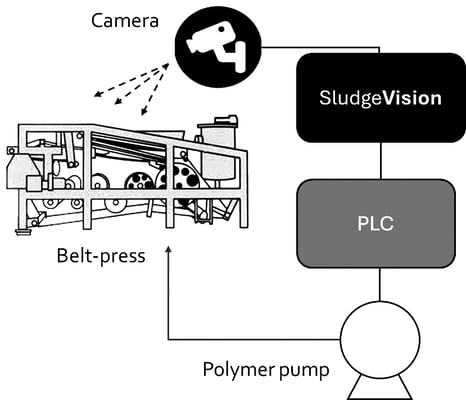
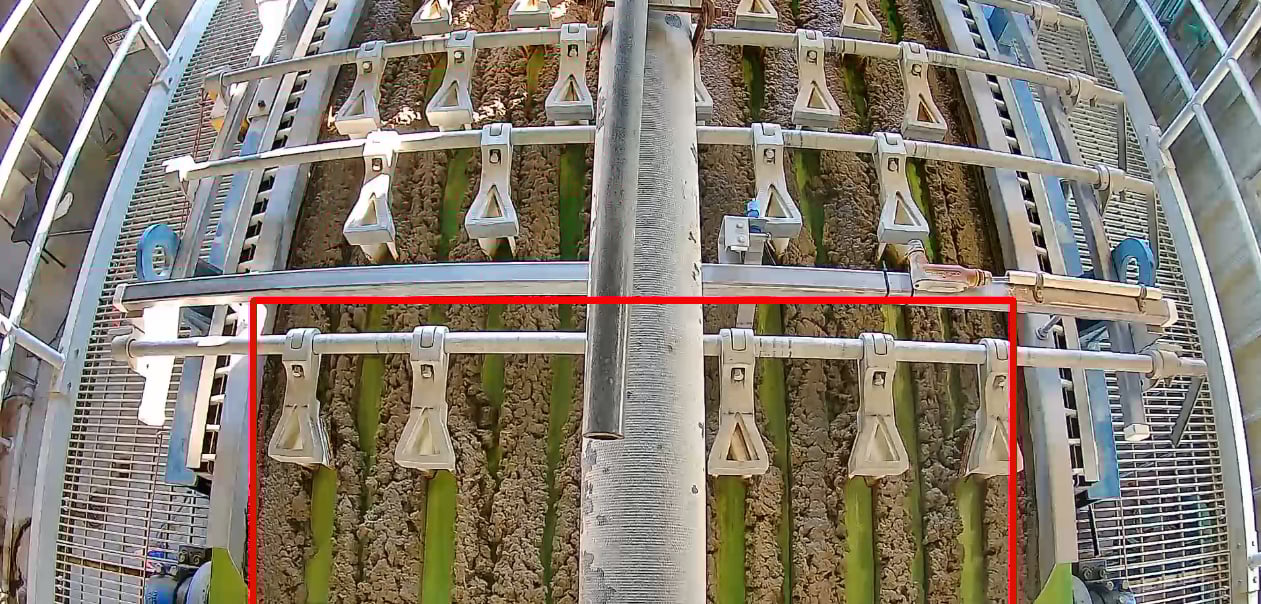
SludgeVision uses a strategically mounted camera and a Base Station to continuously monitor your gravity belt press. The system’s computer vision algorithms analyze the visible fractions of sludge and belt in real-time, providing immediate insights into dewatering efficiency. This feedback enables operators to make on-the-fly adjustments or integrate SludgeVision into existing PLC/SCADA systems for automated polymer dosage control.
How We Achieve Optimal Dewatering Performance
SludgeVision transforms sludge dewatering from a heuristic, labor-intensive practice into a data-driven, automated process control application.
- Real-time Monitoring: The camera captures a live feed of your belt press, feeding data directly to the SludgeVision software.
- Intelligent Analysis: The software processes this visual data to determine the optimal polymer dose needed for effective sludge separation.
- Actionable Feedback: The data is translated into real-time feedback that can be used by operators or integrated into your existing PLC/SCADA systems for automated polymer dosage control.
- Fail-safe Mode: The system has a built-in fail-safe (Safe Mode). If the camera feed is lost or communication is interrupted, it automatically reverts to a safe, predefined pump speed to prevent over- or under-dosing.
SludgeVisionTM Polymer Control System (SV-PCS)
The SludgeVision PCS combines a non-invasive, real-time HD camera, a computer-vision engine, and a control system designed for sludge dewatering using belt presses. It continuously monitors sludge dewatering, delivering immediate insights into belt-press performance.
Key Features
- Non-invasive: Camera mounted above the belt press.
- Computer Vision: Real-time analysis of sludge dewatering performance.
- Automation: Polymer pump dosage is controlled by the HMI/PLC and SludgeVision’s control algorithm.
- Fail-safe mode: Reverts to safe mode if alarms or anomalies are encountered.
Technical Specifications:
- Camera: High-Definition IP camera, PoE, 1920x1080 resolution, IP68 rated.
- SludgeVision Base Station: Industrial minicomputer, 10.1" touchscreen running SludgeVision software, CPU: Quadcore ARM Cortex-A72, 8GB RAM, 128GB SSD storage.
- Communications: Modbus TCP: 10/100 Mbps Ethernet, Modbus RTU serial RS485, Analog: 4–20 mA.
Key Benefits: Save Time, Money, and Resources
Time Savings: Operators can step away from constant monitoring and focus on other tasks.
Polymer Savings: Maintain optimal dosage and reduce chemical usage, lowering operational costs.
Consistent Performance: Real-time control ensures reliable sludge separation quality, even as sludge composition and belt-press conditions fluctuate.
What is SludgeVISION?
SludgeVISION is an advanced computer-vision–based system that optimizes sludge dewatering and thickening in belt filter presses and thickeners. It replaces subjective, manual observation with real-time, data-driven control to improve performance, reduce polymer consumption, and save operator time.
How does SludgeVISION work?
SludgeVISION uses a non-invasive, industrial-grade HD camera to continuously monitor the gravity section of your belt press or thickener. Proprietary computer vision software analyzes the video stream in real time, calculating the visible fraction of belt versus sludge. This data is used to provide actionable feedback or automatically adjust polymer dosage through your existing control systems.
What equipment is required?
SludgeVISION consists of:
- A high-resolution industrial HD camera
- A SludgeVISION Base Station (industrial-grade computer)
- SludgeVISION software
- Optional Polymer Control System (PCS) for closed-loop automation
All components are designed for industrial wastewater environments.
What is the SludgeVision Base Station?
The Base Station is the central hub of the system. It hosts the SludgeVISION software, processes camera data, and manages communication with your polymer system, PLC, or SCADA for real-time monitoring and control.
What are the main benefits of SludgeVISION?
Key benefits include:
- Reduced polymer consumption (often up to 30%)
- Consistent dewatering or thickening performance
- Less operator intervention and supervision
- Improved process stability despite changing sludge conditions
- Measurable operational cost savings
How does SludgeVISION reduce polymer usage?
By continuously monitoring sludge behavior and belt exposure, SludgeVISION delivers precise feedback on dewatering efficiency. This allows polymer dosage to be optimized in real time—eliminating overfeeding while maintaining or improving performance.
Can SludgeVISION operate automatically?
Yes. When integrated with the Polymer Control System (PCS), SludgeVISION can run in Auto Mode, automatically adjusting polymer pump speed based on real-time process conditions. This creates a true closed-loop control system.
What happens if communication or the camera feed is lost?
SludgeVISION includes a built-in Safe Mode fail-safe. If communication is interrupted or the camera feed is lost, the system automatically reverts to a predefined, safe polymer pump speed to prevent over- or under-dosing.
Will the system work if the belt is dirty or discolored?
Yes. SludgeVISION’s algorithms are trained to differentiate between sludge and belt material, even when the belt is dirty, stained, or uneven in color. This ensures reliable analysis under real-world operating conditions.
Can SludgeVISION integrate with existing plant systems?
Absolutely. SludgeVISION is designed for seamless integration with:
- Existing polymer system control panels
- Plant PLCs
- SCADA systems
No major process changes are required.
Can SludgeVISION be used for more than polymer control?
Yes. While polymer dosage optimization is the primary application, SludgeVISION’s analytics can also support optimization of other process variables, such as:
- Polymer dilution water
- Polymer mixing energy
Overall dewatering process stability
Is SludgeVISION invasive or disruptive to install?
No. The camera system is non-invasive and does not interfere with normal operation. Installation is straightforward and can be supported by CleanWater1’s service team.
Is SludgeVISION available for purchase or lease?
SludgeVISION is available through both:
- Capital purchase
- Leasing programs
Your CleanWater1 sales representative can help determine the best option for your facility.
What support and service options are available?
CleanWater1 offers:
- Software maintenance agreements
- Telemetry and remote support
- Online operator training
- Installation assistance
- SCADA integration
- In-person training services
These services ensure your system runs optimally from day one and over the long term.
Can I try SludgeVISION before committing?
Yes. CleanWater1 offers a SludgeVISION Try & Buy program, allowing you to trial the system at your plant and evaluate performance before making a final decision.
Can I use SludgeVision to optimize other variables?
Yes. While its primary function is polymer dosage control, the system’s analytical capabilities can be expanded to provide insights for optimizing other parameters, such as belt press speed.

Let's get the conversation started
Tell us a little bit about you and the information you’re looking for and we'll send you information by email about the topics you are interested in. Check the box to have a cleanwater1 expert contact you within one business day.
Additional Resources
Learn At Your Pace
By subscribing to our learning track, you will receive emails featuring videos, webinar invites, informative articles and more.
View Our Online Library
Featuring brochures, case studies, data sheets and more. Filter by product category, brand, location, use case or document type.
Connect With Us
Contact a member of our team using our online form, by email or give us a call. We look forward to speaking with you.