

PAX TRS™
PAX TRS™, Trihalomethane Removal System
The Ideal Choice for THM Reduction and Removal
Trihalomethanes (THMs) are chemical compounds that form when natural organic matter in water reacts with chlorine during the disinfection process. THMs are a suspected carcinogen and regulated in many countries. Exceedences of the Maximum Contaminant Level (MCL) for THMs are among the most common violations of the EPA Stage II DBP rule in the United States.
Unlike most THM removal technologies that involve large-scale changes to the water treatment plant, the PAX TRS™ (Trihalomethane Removal System) is a custom-designed, energy-optimized system of mixers, aerators and ventilation systems that converts ordinary water storage tanks into water treatment systems.
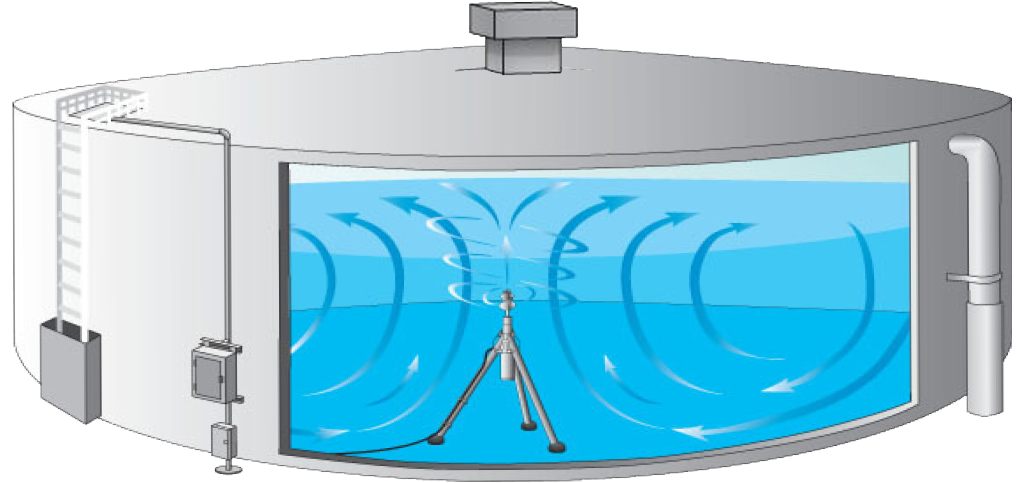
By implementing a thoughtful combination of sub‐systems that include active headspace ventilation, PAX Mixers for powerful tank mixing, NSF certified surface aerators and Neptune-Toolbox modeling, PAX TRS™ systems have become the leading choice for utilities and engineers that require guaranteed levels of THM reduction in water storage tanks.
Neptune-Toolbox™ is a modeling tool that looks at tank hydraulics, mass transfer, THM loading, THM diffusion rates and energy consumption to develop the optimal system design for a particular tank.
A PAX Mixer is used to continually move THM-concentrated water to the surface where THMs are volatilized and evacuated by active headspace ventilation.
Key Elements of a Successful THM Removal System
Successful tank-based trihalomethane (THMs) aeration requires three elements:
- A well-mixed tank
- A continual supply of fresh air circulating through the tank headspace
- Enough water surface area to achieve the desired level of removal
So while a PAX Mixer is used to continually move THM-concentrated water to the surface where THMs are volatilized, active headspace ventilation is used to remove the saturated air out of the tank.
Our Secret to Cost-Efficient THM Removal: Ventilation, Active Mixing and Modeling
Headspace ventilation devices are critical to ensure that THMs which volatilize into the tank’s headspace are efficiently removed from the tank.
PAX Mixers assist in removing THMs by continually pushing water up to the surface where the THMs can evaporate out of the water and into the headspace of the tank.
Modeling enables our engineers to use tank volume, fill/drain cycle, geometry and THM speciation to derive an optimal mixer energy input. With this information, our engineers will recommend available mixer form factors, aeration devices and ventilation combinations to ensure optimal THM removal.
The Neptune-Toolbox™ Model
Using water storage assets as a starting place to effect the removal of THMs from water distribution networks makes sense from both a hydraulic and chemical engineering perspective. Each water distribution network will experience unique THM formation characteristics which dictate the level of THM formation through the network over time.
Water characteristics such as water age, temperature, disinfectant concentration and disinfectant residual type all influence the formation of THMs. As a result, we have developed a robust model called Neptune-Toolbox, that considers the factors that contribute to THM formation in water systems and helps derive an engineered THM removal solution that meets client needs for THM removal.
Energy consumption is often the most significant factor in a system’s total cost over a period of years. The Neptune-Toolbox™ model determines whether the energy consumption tradeoff is worth the initial equipment cost. It can provide a series of equipment recommendations based on client circumstances and requirements.
The Neptune-Toolbox™ design tool is backed by the industry’s strongest guarantee for THM removal products ‐> 100% success rate in achieving removal targets!
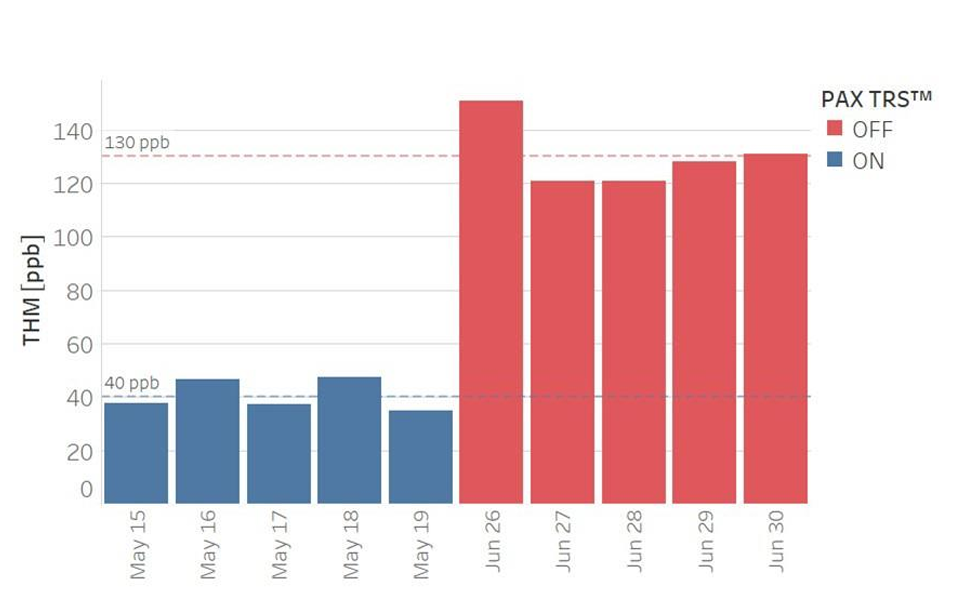
"We are seeing excellent results from the system. We are seeing THM levels 40-70% lower leaving our tank than those coming in."
Product Information
System Features
- Guaranteed THM removal rates
- VFD controlled tank headspace ventilation equipment that is tuned for each tank
- Aggressive tank mixers for removing THM concentration gradients and optimizing THM removal efficiency
- Surface aeration and spray aeration options for additional mass transfer where high levels of THM removal are required
- Sophisticated tank modeling and process control for smart energy management
- NSF61 approved materials
- Active headspace ventilation creates ideal conditions to volatilize THMs
- Robust equipment including non-clogging aeration nozzles and low maintinance surface aerators
Overview of Control Panel
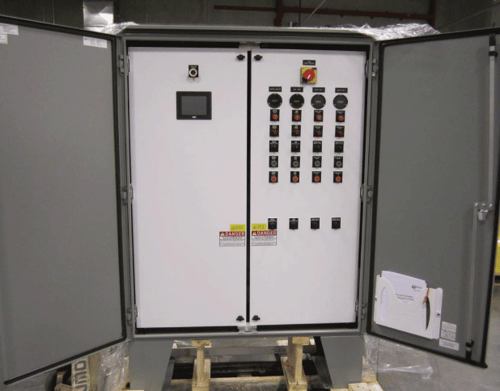
The Integrated control panel brings the controls for aeration, air handling, and mixing systems into a single, high quality control panel that meets the specific and unique standards of each customer.
From a bare bones set of motor starters, to custom programed PLC based panels, we have the experience and expertise to understand your controls requirements and deliver plug and play panels that minimize field wring.
With our standard offering featuring Allen Bradley components, we can provide the right level of customization. Options include:
PLC Manufacturer: Allen Bradley, Siemens, GE, IDEC
Enclosure Type: NEMA 3R, NEMA 4X, Deadpanels, Sunshades
Active Feedback Control: Integrate an on-line THM sensor to continually monitor THM concentration in the tank effluent, and save energy and run time by turning off equipment when THM treatment is not needed.
Customized Designs
When it comes to selecting the right THM removal system for your tank, custom design is key. Optimizing system design is critical for predicting and achieving THM removal rates, minimizing energy requirements and calculating long-term operating costs.
We partner directly with municipalities and engineers to diagnose THM formation and perform a system-wide treatment analysis. This data combined with our proprietary design and performance modeling software, enables us to create in-tank aeration systems that are cost-effective and energy-optimized.
The result is right-sized THM removal technology for your specific tank’s needs.
"The PAX TRS™ system was easy to install and performed well by delivering a level of THM removal that helps ensure our system compliance."
TRS FAQs
Trihalomethanes (THMs) are a group of chemical compounds that can form when chlorine or other disinfectants react with organic matter in water. They are named for their chemical structure, which includes three halogen atoms (such as chlorine, bromine, or iodine) bound to a single carbon atom.
The most common THMs found in water supplies include chloroform (CHCl3), bromodichloromethane (CHBrCl2), dibromochloromethane (CHBr2Cl), and bromoform (CHBr3). These compounds are considered disinfection byproducts (DBPs) because they are created as a result of the disinfection process used to kill harmful microorganisms in drinking water.
THMs are regulated in drinking water because they have been associated with potential health risks. Long-term exposure to high levels of THMs has been linked to an increased risk of certain cancers, as well as adverse reproductive outcomes.
The Maximum Contaminant Level (MCL) for Total Trihalomethanes (TTHMs) in drinking water, as set by the United States Environmental Protection Agency (EPA), is 0.080 milligrams per liter (mg/L) or 80 micrograms per liter (µg/L).
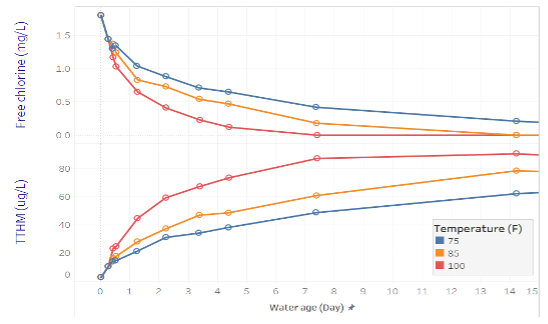
Trihalomethanes (THMs) are formed as disinfection byproducts (DBPs) when chlorine and/or bromide react with naturally occurring organic and inorganic matter present in water. The formation of THMs typically occurs during the disinfection treatment process at the treatment plant and THMs continue to formed in the distribution system as water age in the system.
The rate of THM formation is influenced by water temperature and concentration of free chlorine residual in the water. Highest THM levels are typically found at the far-end of the distribution system where water age is high.
Aeration is a water treatment process that involves exposing water to air, typically by bubbling air through the water or allowing water to come into contact with air. Aeration can remove certain volatile organic compounds (VOCs), including some trihalomethanes (THMs), from water through a process known as air stripping. The THMs dissolved in the water have a tendency to volatilize into the air because they are relatively volatile compounds.
Halo Acetic Acids (HAAs) are disinfection byproducts (DBPs) that form when chlorine or other disinfectants react with natural organic matter in water. HAAs are not volatile, therefore aeration is not an effective method for directly removing them from water.
Henry's Law is a principle in physical chemistry that describes the relationship between the concentration of a gas in a liquid and the partial pressure of that gas above the liquid. It states that at a constant temperature, the amount of gas dissolved in a given volume of liquid is directly proportional to the partial pressure of that gas in equilibrium with the liquid.
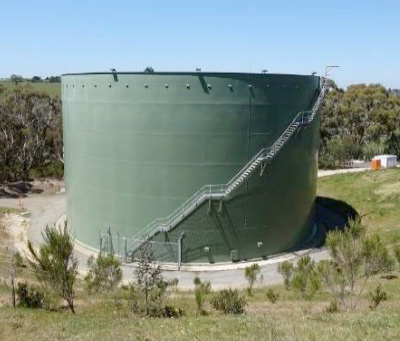
In-tank aeration refers to an aeration process deployed inside a water storage tank in drinking water distribution system. It is generally a combination of active mixing, active ventilation and surface aeration equipment.
The PAX THM Removal System (PAX TRS™) is a technology using in-tank aeration to remove THMs from drinking water. Each system is designed and sized to remove THM in under to achieve a desired percentage removal (%) of THM.
Active ventilation is critical to remove volatile such as THMs into a drinking water storage tank. Without sufficient air-exchange between the head space inside of the tank and the air outside, the air inside the tank becomes saturated with THMs and the mass transfer stopped because the equilibrium described by Henry’s law is reached.
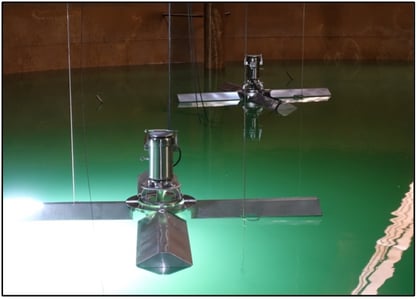
The role of the active mixer is to maintain homogeneity of the chemicals, such as THM, across the entire volume of water. The mixer helps bridge the diffusional barrier at the water surface during aeration. It brings THM-rich water in contact with air. The circulation generated by the mixer also enhances the mass transfer occurring at the water surface.
Combining active mixing with active ventilation offers a method to remove THM. However, the effectiveness of mass transfer via aeration is constrained by the surface area of the air-water interface and turbulence levels at the surface.
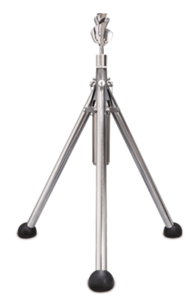
A surface aerator is an equipment installed at the water surface to increase mass transfer by creating air-water interface and turbulence. Surface aerators are used to achieve higher mass transfer required when treating large amounts of water and/or removing high amounts of THM.
Several factors influence the THM removal for a specific project. The main factor is the amount of water to treat, and the amount of aeration energy/equipment used.
In practice, PAX TRS™ solutions are designed and sized given a maximum turnover rate and removal requirements. Once installed, the performance of aeration will depends on the amount of water to be treated each day.
Yes. The pH of water can be affected by aeration. The equilibrium between CO2, hardness and pH can cause the pH to change when concentration of CO2 is changing due to aeration.
Yes, aeration can remove free chlorine from water but typically not significantly.
Free chlorine exists as a combination of hypochlorous acid (HOCl), which is somewhat volatile, and hypochlorite ions (OCl⁻), which are non-volatile. The pH of the water affects the relative concentrations of HOCl and OCl⁻. At typical drinking water pH levels, OCl⁻ predominates, which is why aeration doesn't significantly affect chlorine residual.
Yes, aeration can remove free chlorine from water but typically not significantly.
Free chlorine exists as a combination of hypochlorous acid (HOCl), which is somewhat volatile, and hypochlorite ions (OCl⁻), which are non-volatile. The pH of the water affects the relative concentrations of HOCl and OCl⁻. At typical drinking water pH levels, OCl⁻ predominates, which is why aeration doesn't significantly affect chlorine residual.
There exist several strategies to reduce THMs:
- Removing organic matter, which serves as a precursor, at the treatment plant.
- Decreasing the disinfection dosage applied.
- Employing aeration to eliminate THMs post-formation.
- Adopting alternative disinfection methods like chloramine.
Featured Installations
Western Water
Goal: Utilize aeration in the distribution system to mitigate THM levels. Their goal was 30% THM removal in their Rosslyne Tank.
Outcome: The PAX TRS™ THM Removal System removed 36% of THMs after the first test. It only took a couple of days for PAX TRS™ to achieve its lowest levels of THMs. This lower level remained consistent. PAX TRS™, accompanied by PAX mixing technology, enabled Western Water to run the equipment 24/7.
Suisun Solano
Goal: THM removal in their 2MG tank
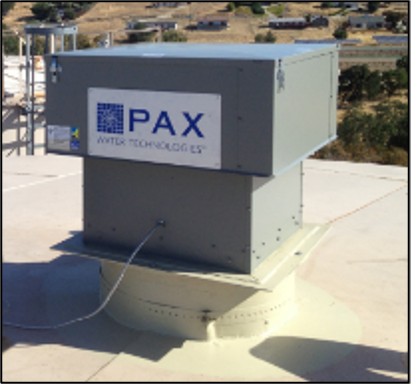
Solution: PAX TRS™THM Removal System, a PAX PWM-400 tank mixer, a rooftop ventilation unit and 4 surface aerators
San Luis Obispo
Goal: Manage THM formation as water age increases. Stay below the 80 parts per billion (ppb) threshold set by the US EPA. Achieve a 40% THM reduction.
Solution: PAX TRS™THM Removal System and a PAX PWM-500 tank mixer
Benefits of PAX TRS™
Custom-designed system for precise THM removal reates
Energy-optimized for low operating cost
Scalable designs for tanks 50,000 gallons to 50 million gallons

Let's get the conversation started
Tell us a little bit about you and the information you’re looking for and we'll send you information by email about the topics you are interested in. Check the box to have a cleanwater1 expert contact you within one business day.
Additional Resources
Learn At Your Pace
By subscribing to our learning track, you will receive emails featuring videos, webinar invites, informative articles and more.
View Our Online Library
Featuring brochures, case studies, data sheets and more. Filter by product category, brand, location, use case or document type.
Connect With Us
Contact a member of our team using our online form, by email or give us a call. We look forward to speaking with you.